Develop AI to Predict Kidney Failure Early

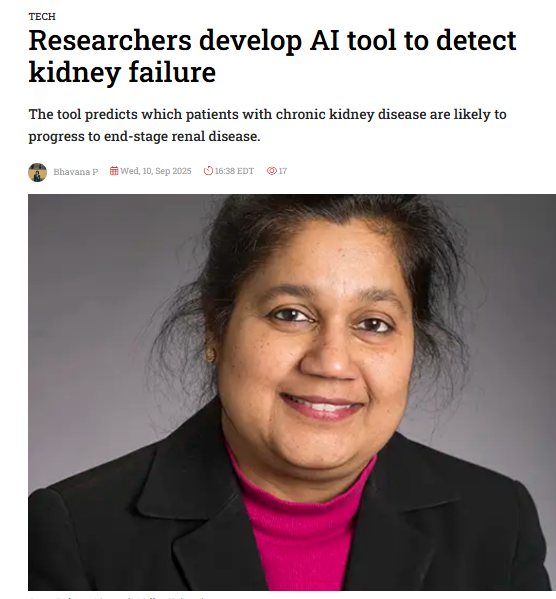
Carnegie Mellon University researchers, under the leadership of
Indian-American scholar Rema Padman, have made a major breakthrough in
healthcare technology by developing advanced artificial intelligence (AI)
models that can predict kidney failure earlier and more accurately. This
innovation holds the potential to change how doctors manage chronic kidney
disease (CKD), offering hope to millions worldwide.
The AI models integrate electronic
health records with insurance claims data, creating a comprehensive picture
of a patient’s health journey. By analyzing this combined information, the
system can identify patients at high risk of progressing from CKD to end-stage
renal disease (ESRD). Early detection means doctors can plan personalized
treatment strategies, delay disease progression, and ultimately improve
survival rates.
According to experts, such predictive technology not only empowers
physicians but also addresses long-standing disparities in kidney care.
Communities that traditionally face barriers to healthcare access may benefit
significantly from these tools, as they provide a more consistent and accurate
way to detect risks before they become life-threatening.
New
India Abroad highlights that this development is a strong example of how
Indian-origin scholars are making global contributions in medical research and
technology. With kidney disease being a growing concern worldwide, AI-driven
tools like those created by Professor Padman and her team could play a
transformative role in shaping the future of preventive medicine.
By bridging data and healthcare expertise, this innovation represents
the next step in making medical care smarter, faster, and more inclusive. As
researchers continue to refine these models, the promise of reducing the burden
of kidney failure becomes increasingly attainable.


Comments
Post a Comment