President Donald Trump’s Administration Scales Back U.S. Human Rights Report – New India Abroad

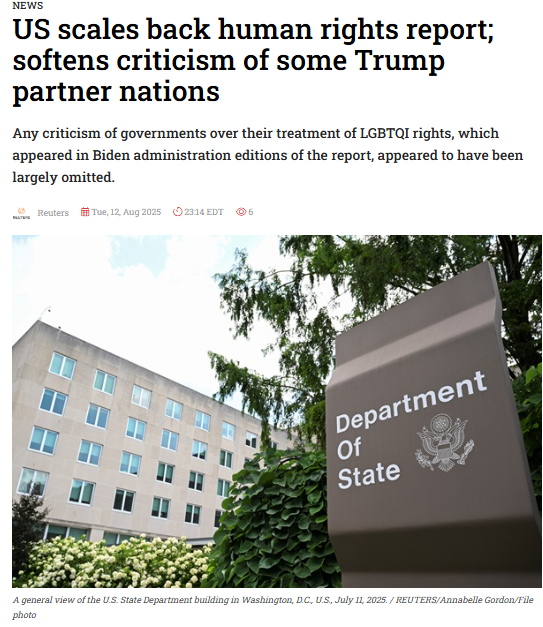
The Trump administration’s 2024 U.S. State Department Human Rights
Report marks a sharp departure from previous editions, significantly softening
criticism of allied nations like El Salvador and Israel while intensifying
scrutiny of political rivals such as Brazil and South Africa. Rights
organizations say the omissions reflect political priorities over factual
assessments.
Compared
to the Biden-era reports, references to LGBTQI rights and explicit
condemnation of alleged abuses by key partners have largely vanished. The
section on Israel is notably shorter, excluding mention of Gaza’s humanitarian
crisis and death toll, despite reports of over 61,000 fatalities following
Israel’s 2023 military campaign. In contrast, the report emphasizes
freedom-of-speech issues in Europe and criticizes Brazil’s judiciary for
allegedly suppressing Bolsonaro supporters.
El Salvador’s profile shifted dramatically from detailing unlawful
killings and prison abuses in 2023 to stating there were “no credible reports”
of significant rights violations. Analysts note that this aligns with Trump’s
strengthened ties with President Nayib Bukele, including $6 million in U.S.
funds to detain deportees in a mega-prison.
In South Africa, the report
alleges worsening discrimination against Afrikaners and controversial land
expropriation plans, echoing far-right narratives. South Africa dismissed the
findings as inaccurate and politically motivated.
Critics, such as former State Department official Josh Paul, likened the
new report to “Soviet propaganda,” while officials defended it as more readable
and free from “politically biased demands.” The overhaul follows a purge of
staff from the Bureau of Democracy, Human Rights, and Labor, with Secretary of
State Marco Rubio pledging to align the bureau’s focus with “Western values.”
This year’s edition underscores a shift in U.S. foreign policy:
selective advocacy, prioritizing alliances, and reframing human rights through
an “America First” lens.


Comments
Post a Comment